Garbage Collection
Garbage Collection
Feb 2021
Takashi Idobe
- Imagine you have your own room, and you have to take out the trash
every once in a while.
- That’s basically garbage collection.
Strategies
- No GC
- Reference Counting
- Mark-Sweep
- Multi-Space
No GC
- We allocate a chunk of memory up front, and when we use it all up,
we crash.
- At the end, we throw everything away.
Visualization
- Black = Memory not in use
- Green + Yellow = Memory in Use
- Gray = Memory not in use for long time.
Usage
- High Frequency Traders do this a lot.
Pros
Cons
- We can’t free anything.
- Memory Fragmentation.
Reference Counting
- Keep track of how many times you’re using a resource.
- When it drops to 0, free it.
Usage
Pros
Cons
- Can’t handle cyclic structures (like Graphs)
- Counters aren’t thread-safe, so perf hit.
- Can trigger large GC pauses on frequently referenced data.
Mark Sweep Collector
- Every once in a while, pause the program’s execution, and see if
objects are reachable.
- If reachable, mark as reachable.
- If not reachable, reclaim.
Usage
Pros
- Less overhead than RC.
- No counting required
Cons
- Fragmentation
- Can trigger large GC pauses when there’s a large amount of
data.
Mark Compact
- Mark-Sweep, but compacts memory after sweep.
- This requires an extra sweep to figure out where to put items.
Usage
Pros
- Less Fragmentation
- Better Performance?
Cons
- GC Pauses are longer than Mark-Sweep.
Copying Collector
- People figured out that young objects tend to be freed more than
older objects.
- Create an area for young objects and one for old objects.
- Check the young area more often, and move young objects to the old
area when some time has passed.
Usage
Pros
- Fewer Sweeps
- Less Fragmentation
Cons
- Memory might take more time to be freed.
- Requires moving memory around.
GC Throughput
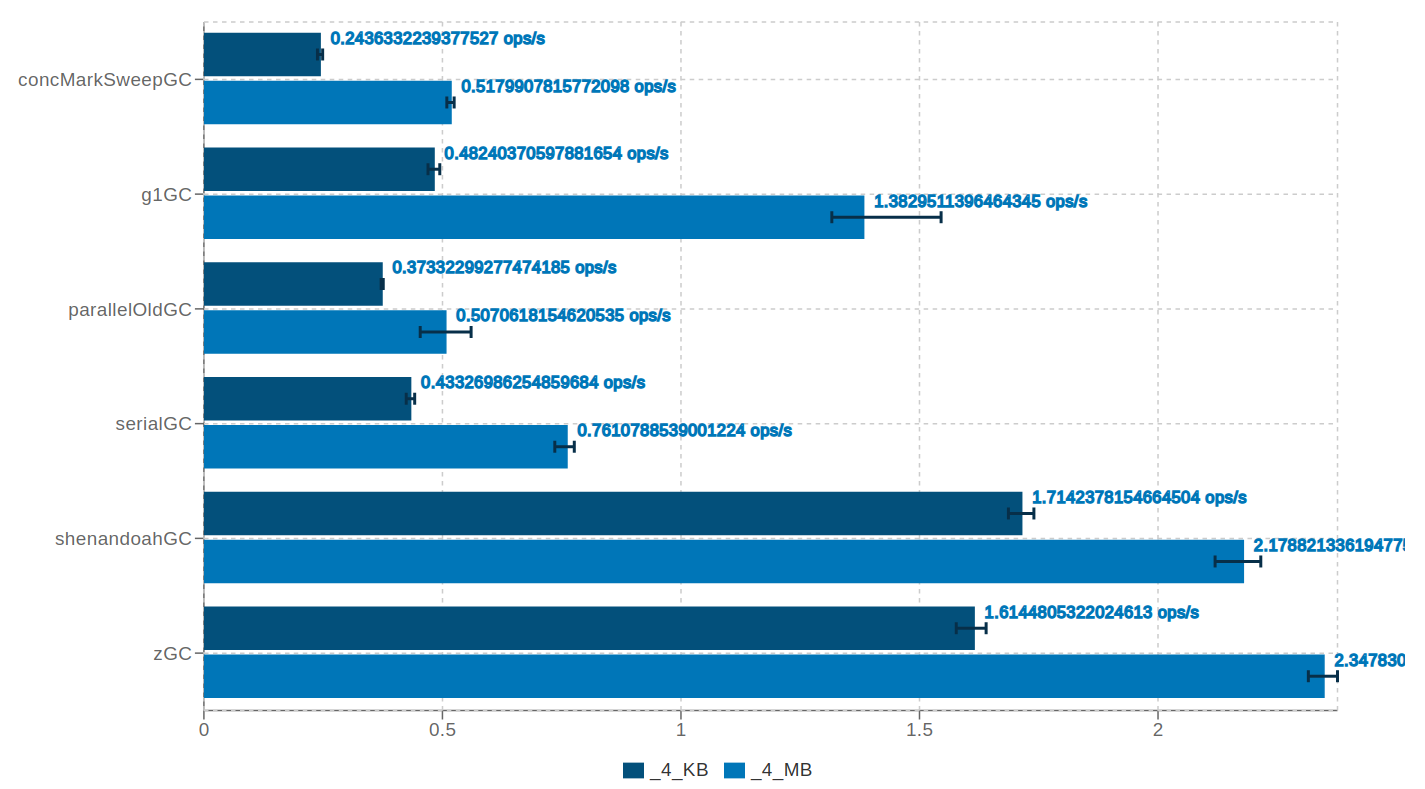
GC Speed
Pause Duration
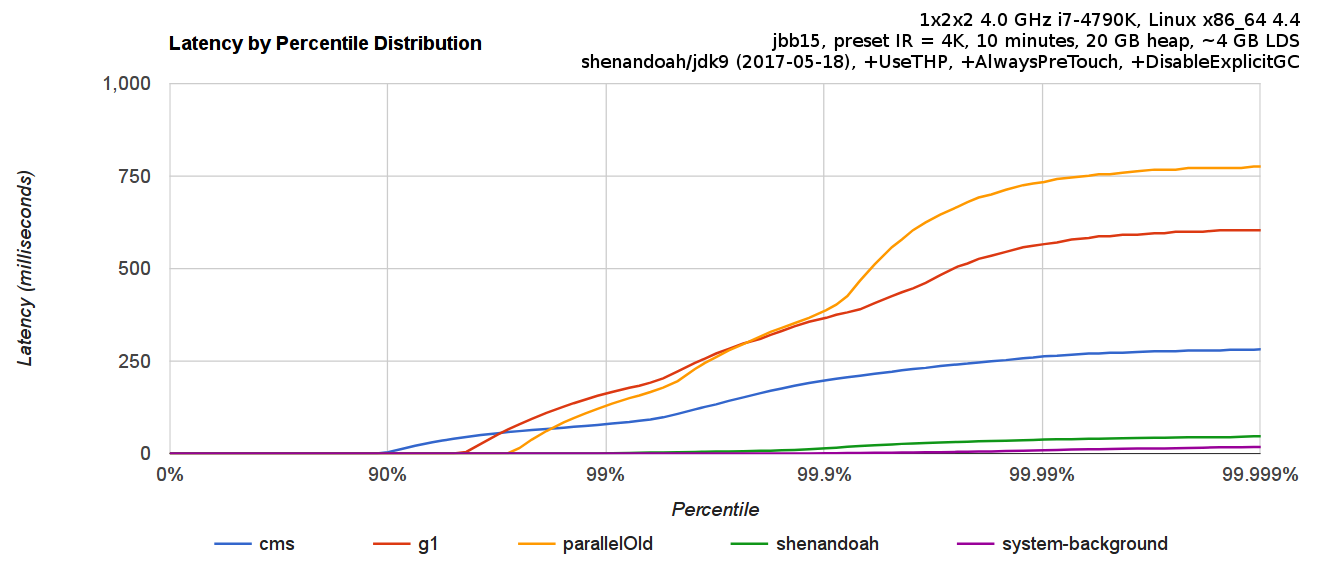
GC Pause
Takeaways
- GC performance can vary wildly based on what GC you choose.
- Pick one that suits your workload.
- It’s hard to make a general purpose GC.